Novita Lab Grown Diamonds Story: From Vision to Fine Jewelry
A diamond’s appearance rarely reveals where it came from. Two stones may look almost identical in an engagement ring, even though one formed underground and the other grew in a controlled laboratory.
That distinction has changed how jewelry businesses approach diamond sourcing, design, and pricing.
Novita Diamonds is among the retailers that built their business around laboratory-grown stones rather than treating them as a secondary product. Its development reflects a wider change in fine jewelry: customers can now compare diamonds by their appearance and specifications while making a separate decision about origin.
The company’s background also raises useful questions for anyone purchasing diamond jewelry in Germany. Who established Novita? What distinguishes its approach? And how much should a company’s story influence the selection of an engagement ring?
Where the Novita Diamonds Story Began
Novita Diamonds was founded in Australia in 2019. Its founder and CEO, Iris Arnold, has discussed the company’s approach to lab-grown jewelry in public interviews, including a 2025 conversation with The Korea Times.
The business focused on laboratory-grown diamonds at a time when these stones were becoming a more familiar option in engagement rings and other fine jewelry.
According to the company’s published profile, the name Novita comes from a Latin word meaning “new.” It reflects the decision to establish a jewelry business around an alternative source of diamonds rather than rely on traditionally mined stones. What makes this background relevant is the company’s original product focus.
Some jewelry retailers added laboratory-grown diamonds to existing natural diamond collections. Novita instead made laboratory-grown stones central to its business identity.
That distinction matters because a retailer specializing in one diamond category can structure its product selection around the characteristics, grading information, and pricing of those particular stones.
It does not, however, establish that every diamond offered by a specialist retailer will be equally well cut or equally suitable for a particular ring.
From an Australian Business to International Jewelry Retail
Novita’s activities expanded beyond its original Australian market, with international operations and a presence in Germany.
A feature in Discover Germany described the company’s custom engagement rings, appointments, and international retail presence. It also featured Arnold discussing the business’s approach to diamond jewelry.
For German customers, this wider presence is relevant for practical reasons rather than simply company recognition.
An engagement ring often requires decisions that are difficult to make from a product photograph alone. Finger size, metal color, setting height, and the relationship between the center diamond and the band can change how the finished piece looks and feels.
The availability of personal consultations can help clarify these details, but buyers should confirm which services are available in their location and what the retailer provides after delivery.
A showroom appointment, an online consultation, and a finished custom order may all involve different conditions.
This is especially relevant for buyers considering personalized rings, where changes to a completed design may be more restricted than returns of standard jewelry.
The Diamond Technology Behind the Brand’s Approach
Understanding the Novita story requires understanding the material on which the business was built. Laboratory-grown diamonds are genuine diamonds. They have essentially the same chemical composition, crystal structure, and optical properties as natural diamonds. The difference lies in their formation.
Natural diamonds develop through geological processes beneath the Earth’s surface. Laboratory-grown diamonds are produced under controlled manufacturing conditions.
The Gemological Institute of America identifies two primary growth methods: High Pressure High Temperature (HPHT) and Chemical Vapor Deposition (CVD).
HPHT and CVD: Does the Growth Method Affect Beauty?
HPHT uses high pressure and temperature to support diamond crystal growth.
CVD creates diamond material using carbon-containing gases inside a controlled chamber.
Both processes can produce gem-quality diamonds, although individual stones may vary in color, clarity, internal characteristics, and treatments applied after growth.
A CVD diamond is not automatically preferable to an HPHT diamond, or vice versa.
For an engagement ring, the quality of the finished cut, the diamond’s visible appearance, and its independent identification deserve closer attention than the production method alone.
This distinction can prevent a buyer from paying extra for a technical label without understanding its practical significance.
What the Novita Story Reveals About Changing Diamond Priorities
Traditional diamond shopping often places considerable emphasis on natural origin and rarity. Laboratory-grown diamonds introduce a different set of purchasing possibilities.
A customer may decide to spend less on the center stone, choose a larger diamond for a similar budget, or reserve additional money for the ring’s craftsmanship.
- None of these decisions is automatically preferable.
- Consider two buyers with the same overall engagement ring budget.
- The first prefers a modest round diamond set in platinum, prioritizing a comfortable ring that can be worn regularly.
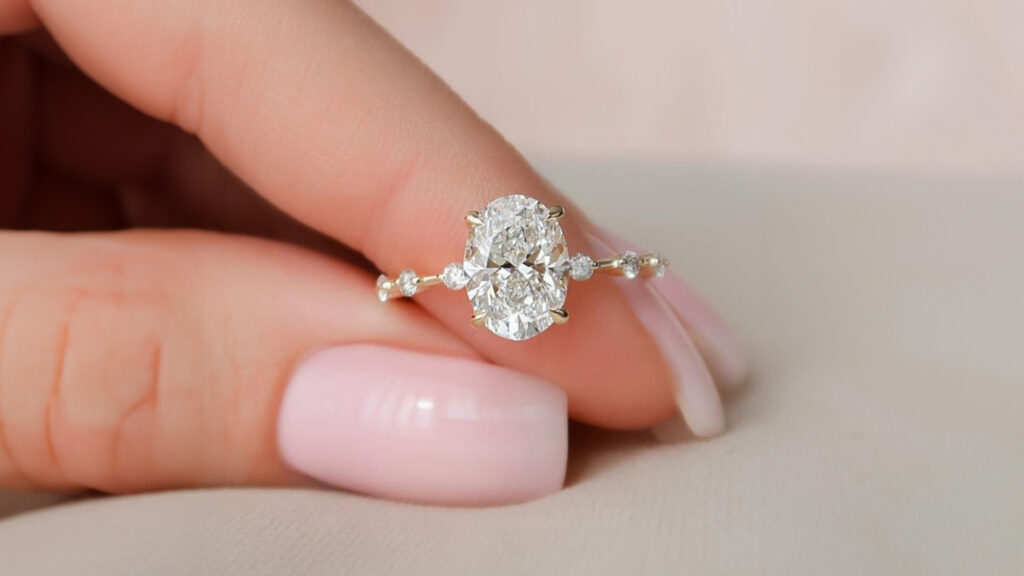
- The second prefers an oval center stone with a more noticeable appearance and a delicate yellow-gold setting.
- Both may consider laboratory-grown diamonds, but their best specifications will differ.
The first buyer could prioritize cut performance and a sturdy setting. The second should pay careful attention to the oval diamond’s proportions, visible bow-tie effect, and the security of its setting. Lab-grown origin makes neither design decision unnecessary.
The broader significance of Novita’s business approach is that customers can examine these design preferences without assuming that natural diamond origin is a requirement for fine jewelry.
Understanding Diamond Quality Beyond the Brand Name
Customers researching the Novita lab grown diamonds story may be interested in the company’s background, but the actual diamond should still be evaluated on its own merits.
Four established characteristics remain useful when comparing stones.
Cut: The diamond’s proportions and finish influence how it handles light. Cut quality can make a noticeable difference to the appearance of a round brilliant diamond.
Color: Color grades describe the presence or absence of color within a particular grading system. A small difference between neighboring grades may be difficult to notice once a diamond is set.
Clarity: Clarity concerns internal and external characteristics. A higher grade is not necessarily worth an added expense when the difference is invisible during normal wear.
Carat weight: Carat measures weight rather than visible diameter. Two diamonds of the same weight can have different dimensions and face-up appearances. A useful comparison begins with the stone’s measurements, not simply its carat number.
For example, someone choosing an oval diamond should examine its length-to-width ratio. Two stones with identical carat weights can appear quite different because one has a longer outline while the other looks more rounded.
This can affect the overall balance of the ring and how the stone looks on the wearer’s hand.
Independent Diamond Reports and What They Actually Confirm
A diamond’s paperwork deserves the same attention as its photographs. Independent gemological reports can document characteristics such as diamond origin, measurements, color, clarity, and other identifying details.
The International Gemological Institute provides reports specifically for laboratory-grown diamonds, with information intended to help identify and compare individual stones. However, buyers should not confuse a grading report with a financial valuation.
A report describing a diamond’s characteristics does not establish what it will sell for in the future or guarantee that another buyer will pay a similar price.
Grading documentation is also not proof that a diamond was produced using a particular amount of renewable energy or under specific labor conditions. Those claims require separate evidence.
Before ordering, buyers should check whether the report number matches the diamond being offered and confirm which grading system the document uses.
This is particularly useful when comparing reports from different lab diamonds, as reporting formats and assessment methods may differ.
The Practical Side of Custom Engagement Rings
A diamond’s origin is only one part of the finished piece. The setting determines how securely the stone is held, how the ring sits on the finger, and how easily it can be maintained.
Several design decisions deserve attention before placing an order.
A Larger Diamond Needs a Suitable Setting
A larger center stone may offer visual impact, but it can also change the ring’s height and balance. High-set diamonds may catch on clothing more easily, particularly when their prongs are exposed.
A lower-profile basket or carefully designed bezel can offer a practical alternative, although the final design depends on the stone’s shape and dimensions.
For an oval or pear-shaped diamond, protective prong placement deserves special consideration because pointed ends can be vulnerable to damage.
Metal Selection Affects Maintenance
Platinum and gold are both established materials for engagement rings, but they age differently.
Platinum can develop a surface patina through regular wear. White gold may require periodic rhodium replating to maintain its bright white appearance, depending on its alloy and finish.
Yellow gold offers a warmer appearance, while rose gold produces a softer pinkish tone.
The metal should complement the diamond’s appearance and suit the wearer’s preference for maintenance.
Wedding-Band Compatibility Should Be Checked Early
Some engagement ring settings prevent a straight wedding band from sitting flush against the ring.
A low basket, prominent prongs, or an unusual setting shape can create a gap between the two pieces.
That gap may be intentional, but it is better to understand the design before ordering.
A jeweler can explain whether a straight wedding band will fit or whether a curved or contoured band is necessary.
What German Buyers Should Confirm Before Ordering
An engagement ring purchased online may require additional planning, particularly if it is personalized.
German customers should confirm the applicable seller details, total price in euros, delivery arrangements, and terms before payment.
A retailer serving several countries may have different delivery procedures, consultation services, or contractual conditions for each market.
The most useful questions concern the actual purchase:
-
Is the diamond independently graded, and can its report be checked?
-
Are the listed carat weights for the center stone or all diamonds combined?
-
Can the chosen setting be resized without affecting its design?
-
Does the ring sit comfortably beside a straight wedding band?
-
What happens if a custom ring needs an adjustment?
-
Who handles repairs, maintenance, or warranty claims?
-
What return conditions apply to standard and personalized orders?
German and EU consumer protections may apply depending on the seller and transaction. However, made-to-order jewelry can be subject to different withdrawal rules from standard products. Buyers should examine the specific terms rather than assume every ring can be returned under identical conditions.
Delivery times should also be checked before planning a proposal date, particularly when sizing, engraving, or custom manufacturing is involved.
A Brand Story Is a Starting Point, Not the Final Measure
Novita’s background reflects a commercial approach built around laboratory-grown diamonds and the growing availability of this category of fine jewelry.
Its establishment in Australia and later international activity provide useful context for understanding the business.
For an individual buyer, though, the more meaningful questions concern the specific diamond, the ring’s construction, and the service attached to the purchase.
A well-chosen laboratory-grown diamond should have an appearance the wearer appreciates, clear identification, and proportions suited to its setting.