Three Stone Rings: A Meaningful Modern Classic in Australia
A ring can hold more than beauty. It can capture a shared history. That idea explains the lasting appeal of three stone rings. Each design features a centre stone with two side stones. The arrangement creates sparkle, balance, and deep meaning.
Many couples see the stones as past, present, and future. Others connect them with friendship, love, and commitment. GIA notes both meanings and traces this ring style back several centuries.
For Australian buyers, the design feels classic without looking predictable. Lab-grown diamonds also allow more freedom with shape, size, and setting.
Why Three Stone Rings Carry Lasting Meaning
A solitaire focuses attention on one diamond. A three-stone ring tells a broader story.
The centre diamond often represents the present. The side stones honour the journey behind it and the future ahead. This symbolism suits engagements, anniversaries, vow renewals, and meaningful gifts.
Couples can choose matching diamonds for a clean look. They can also add different shapes, colours, or birthstones.
A three-stone ring can mark:
- A proposal and future marriage
- A major wedding anniversary
- The birth of a child
- A new chapter together
- A meaningful family connection
This emotional flexibility makes the style useful beyond bridal jewellery.
Lab-Grown Diamonds Bring More Design Freedom
Lab made diamonds share the optical, chemical, and physical properties of natural diamonds. They are not substitutes such as cubic zirconia. Specialist equipment can identify their laboratory origin.
Their value can give buyers more design freedom. A couple may choose a larger centre stone. They may also select stronger colour or clarity grades.
That flexibility matters in three-stone settings. The side diamonds add visible width and brilliance. Their proportions must support the centre stone without competing with it.
Buyers can explore three stone rings from NOVITA Diamonds. The collection includes several shapes, settings, and band styles.
Choosing the Right Diamond Shape Combination
The best combination depends on personal style and daily habits.
A round centre diamond creates bright, even sparkle. Smaller round side stones produce a traditional profile.
An oval centre looks graceful and often appears longer. Pear or half-moon side stones strengthen that flowing shape.
Emerald-cut centres create a clean, architectural look. Tapered baguettes frame their straight lines well.
| Centre stone | Side stone pairing | Overall look |
|---|---|---|
| Round brilliant | Round or pear | Classic and bright |
| Oval | Pear or half-moon | Elegant and elongated |
| Emerald cut | Tapered baguette | Refined and geometric |
| Cushion | Round or trapezoid | Soft and romantic |
| Radiant | Trapezoid or pear | Modern and lively |
Shape matters, but proportion matters more. Side stones should guide the eye toward the centre. They should not hide its outline.
Ring Settings That Balance Beauty and Security
Three-stone settings require careful craftsmanship. Each diamond needs secure support and enough light exposure.
Prong settings show more diamond and create an open look. However, high prongs may catch on clothing.
A lower basket setting can suit active wearers. It keeps the diamonds closer to the finger. Bezel details add protection around exposed edges, especially on pear or marquise shapes.
The band also changes the style. A plain band keeps attention on the diamonds. Pavé adds more brilliance. Yellow gold adds warmth, while platinum and white gold create a crisp finish.
How to Assess Diamond Quality
Do not judge a ring by total carat weight alone. Review each diamond’s quality and role.
Focus first on cut. A well-cut diamond reflects light with greater brightness. For fancy shapes, check symmetry, outline, and visible dark areas.
Next, compare colour. Side stones should complement the centre diamond. A clear mismatch may weaken the design.
Clarity matters, but flawless grades are not always necessary. Many buyers prefer diamonds that look clean without magnification.
Ask for an independent diamond report. IGI reports identify lab-grown origin. They also record cut, colour, clarity, and carat weight.
A Practical Buying Checklist
- Confirm the centre diamond’s measurements
- Compare side-stone proportions
- Review the grading report
- Check the metal type and purity
- Ask how the setting protects each stone
- Confirm resizing and warranty terms
- Try the ring beside a wedding band
These checks help buyers compare quality, not only appearance.
Custom Three Stone Rings for Personal Stories
Custom engagement rings allow couples to shape every detail. They can choose the diamonds, metal, band width, setting height, and finish.
A custom design can also solve practical concerns. Some wedding bands sit poorly beside wide settings. A jeweller can adjust the gallery or band profile for a closer fit.
Personal touches should support the design. An engraving can mark a date or place. A coloured gemstone can represent a birth month. Different side stones can honour two families.
Couples in Australia and New Zealand should also review service access. Ask how consultations, resizing, repairs, and delivery work across locations.
Ethical Sourcing Needs Clear Questions
Many buyers choose lab-created diamonds as an alternative to mined stones. However, responsible buying still requires careful questions.
Diamond growth uses advanced technology and energy. Environmental impact can vary between producers and energy sources.
Ask the jeweller about origin, suppliers, manufacturing standards, and available records. Clear information helps buyers judge ethical sourcing claims.
Also review the precious metal. Recycled gold or platinum may support broader sustainable jewellery goals. Strong craftsmanship can also extend the ring’s life.
A trusted jeweller should explain these details clearly. Premium service depends on transparency, not vague environmental claims.
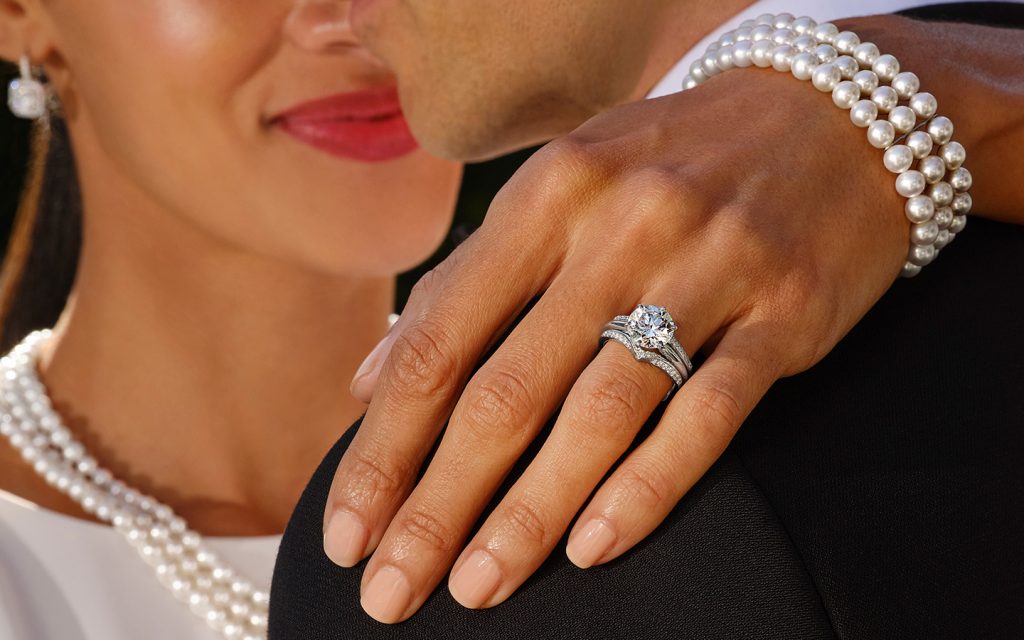
Styling a Three-Stone Ring With Wedding Bands
The engagement ring and wedding band should feel connected. They do not need to match perfectly.
A slim plain band creates clean contrast. A pavé band adds continuous sparkle. A contoured band can sit closer around a wide setting.
Try both rings together before ordering. Check for gaps, rubbing, and uneven height. The combination should feel comfortable during normal movement.