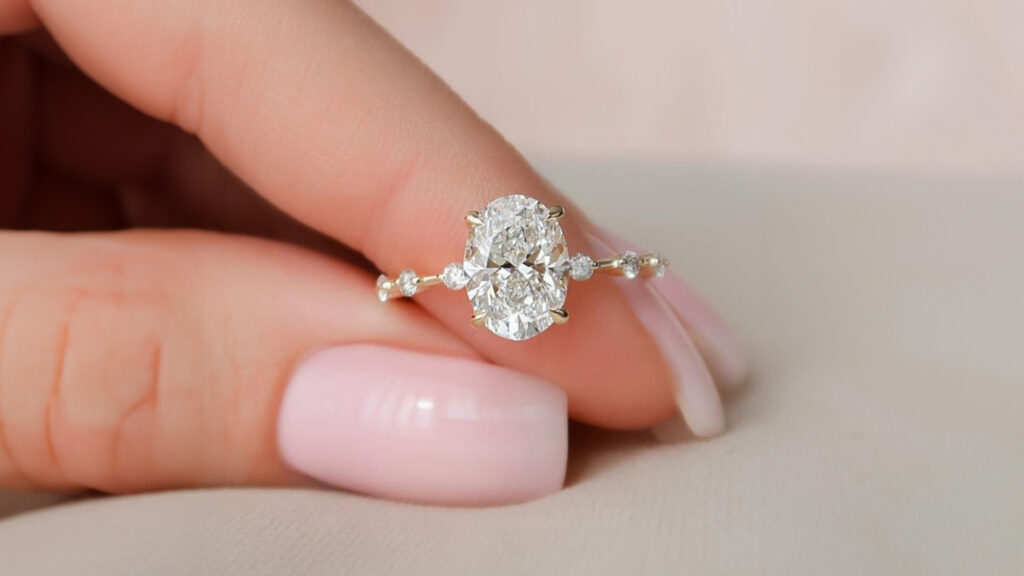
The Quiet Appeal of an Oval Diamond Ring
A diamond’s outline changes the personality of a ring before anyone notices its carat weight. The oval has a particularly appealing balance: softer than a marquise, less traditional than a round, and easy to pair with different settings. Yet shopping for oval engagement rings involves more than choosing a pleasing silhouette.
Proportions Make a Visible Difference
Two diamonds with the same carat weight can look surprisingly different. An oval’s length-to-width ratio describes its shape: divide the length by the width. A ratio near 1.35 gives a fuller outline, while one around 1.50 creates a more elongated appearance.
Neither is automatically better. Try similar-sized stones on the finger, rather than judging them against a white background. A wider oval can feel substantial; a longer one may give the impression of a slimmer finger.
Carat weight measures mass, not visible size. Check the diamond’s dimensions in millimeters as well, since depth and proportions affect how much surface you see.
Watch the Center of the Stone
Oval brilliant diamonds often show a darker, bow-tie-shaped area across the center. This happens because of how the facets interact with light and the viewing angle. A slight bow tie is normal, but a heavy shadow can draw attention away from the sparkle.
Ask to see the stone moving in a neutral-light video, preferably alongside another oval. Look for lively reflections across the middle, not just bright flashes near the ends. Also check whether the outline looks balanced, with shoulders and tips that mirror each other.
Settings Shape the Everyday Experience
A slim solitaire band puts the diamond’s outline front and center. A bezel surrounds the stone with metal, offering a smooth edge that may suit someone who wears gloves or works with their hands. Four- or six-prong designs give a more open appearance, although the exact prong placement matters for securing the stone.
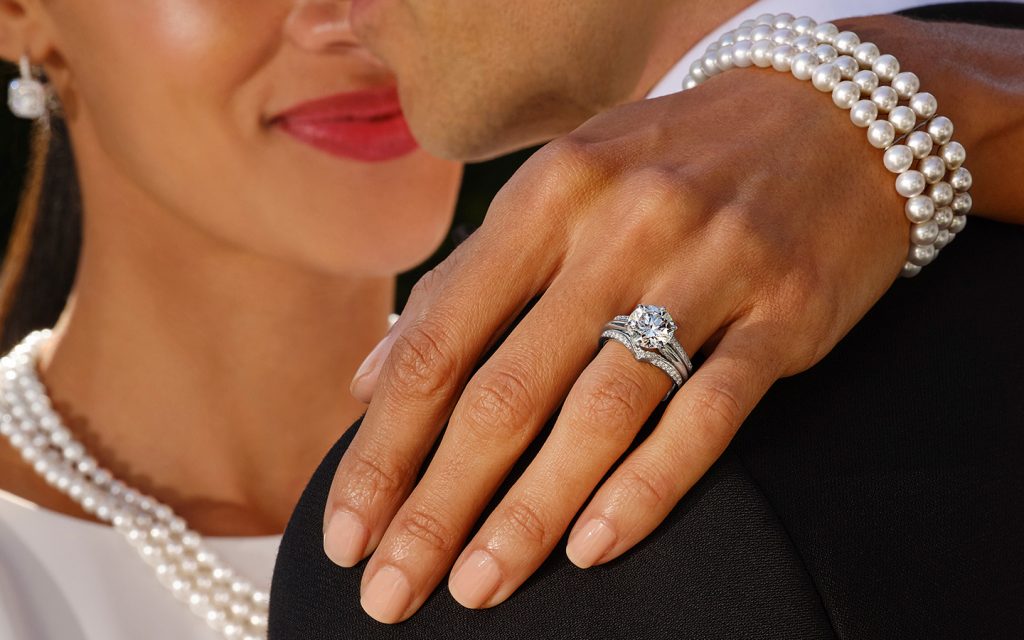
A halo adds visual coverage, while three-stone designs create a wider composition. Before committing, check how a wedding band will sit beside the engagement ring. Some raised baskets allow a straight band to fit flush; lower settings may leave a gap.
Metal choice affects the look, too. Yellow gold creates warmth, platinum has a naturally white appearance, and white gold may require periodic replating to maintain its finish.
Choose the Diamond, Not Just the Label
For oval engagement rings, compare color and clarity with your eyes as well as a grading document. Tiny inclusions near the edge may be less noticeable than marks under the center. An attractive stone need not carry the highest grade in every category.
Buyers also have a choice between mined stones and man made diamonds. Laboratory-grown diamonds have essentially the same chemical, physical, and optical properties as natural diamonds, but their origin differs. Request documentation that clearly identifies which type you are purchasing, and compare prices without assuming future resale value.
A Ring That Works Beyond the Proposal
Before ordering, confirm the resizing policy, return window, and options for repairing worn prongs. A ring that looks beautiful in a display case still needs to withstand regular use.
The most satisfying choice usually comes from comparing actual stones under everyday lighting. If man made diamonds are part of your shortlist, apply the same scrutiny to their proportions, light performance, and setting quality. A thoughtful purchase depends on the details you can see and the terms you understand.